I’d done a lot of searching for a trail marathon or ultra in West Virginia with a generous cutoff. There are not a lot of options. One that stood out when I was looking as I started building up for the HURL Elkhorn 50k and Moose Mountain Marathon was the West Virginia Trilogy. It’s hosted by the West Virginia Mountain Trail Runners the second weekend in October and includes a 50k on Friday, 50M on Saturday, followed by a half marathon (or 5k) on Sunday. Everything takes place at the Spruce Knob Mountain Center near the Monongahela National Forest. Registration includes dinner the night before and a light breakfast on race morning for the 50K and 50M. With many participants aiming to complete the trilogy, the 50k has a “relaxed” time limit of 10.5 hours. I was optimistic that I would be ready by October after having completed a 50k(ish) run in August and marathon in September. (Yes, the post title gives away that I was overly optimistic.)
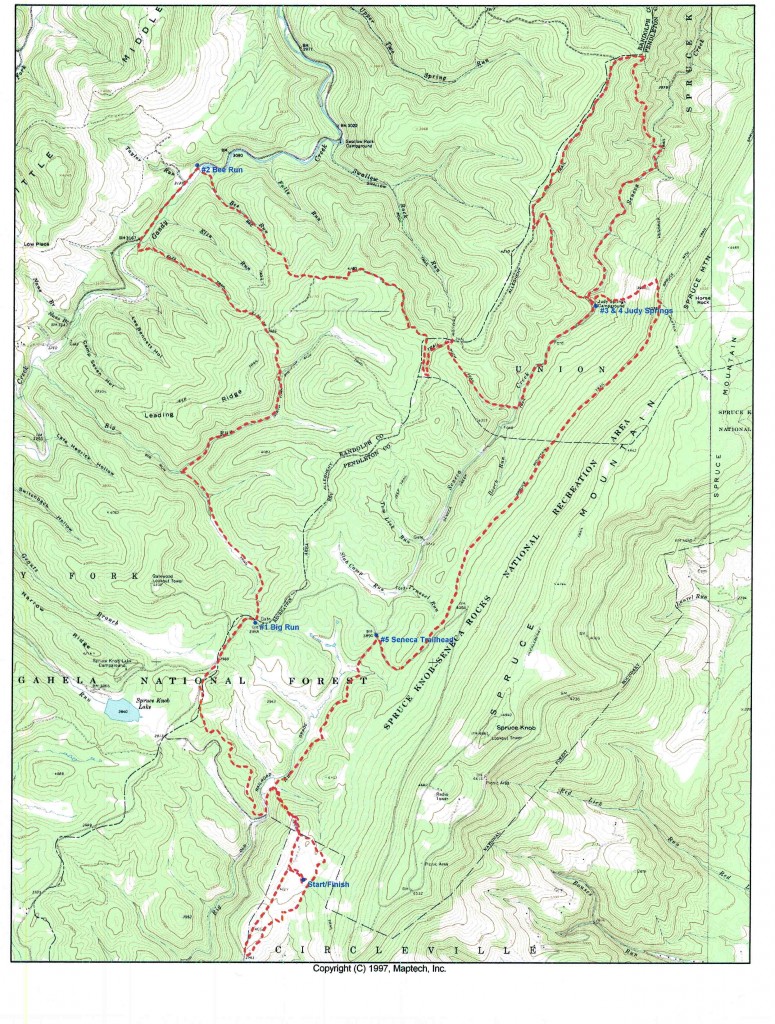
The 50k has a 7am start on Friday and the finish line closes at 5:30pm (~20:19 min/mi pace). Crew are allowed at Aid Station #2 Bee Run (11.3 miles) and Aid Station #5 Seneca (27.7 miles). The aid station cutoffs are a little tighter than the overall race; Bee Run at 11.3 miles closes at 10:45am (~19:54 min/mi pace) and Aid #3 Judy Springs at 16.9 miles closes at 12:30pm (~19:32 min/mi pace). While I knew these paces were attainable for me, the elevation had me worried, as usual. The website lists it at 4,871′ with this concerning graphic:
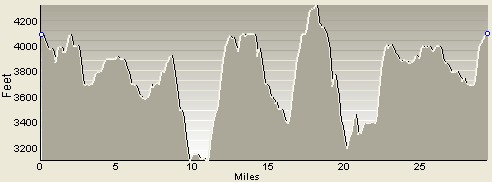
I carefully consulted the course map and it did not ease my worries:
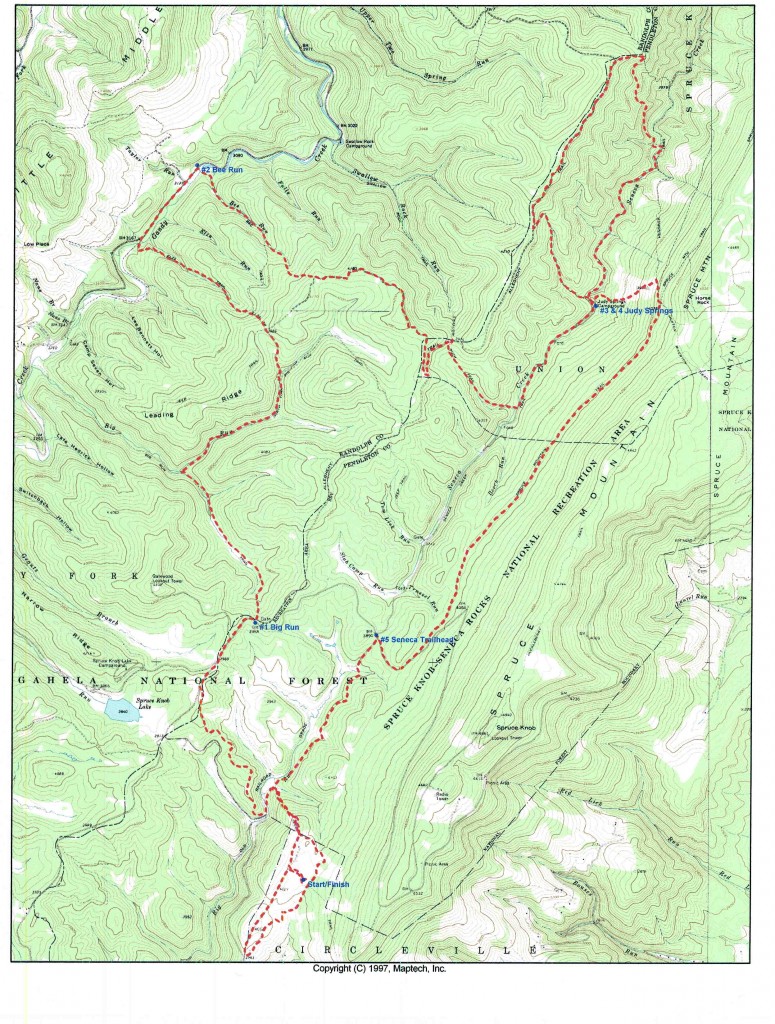
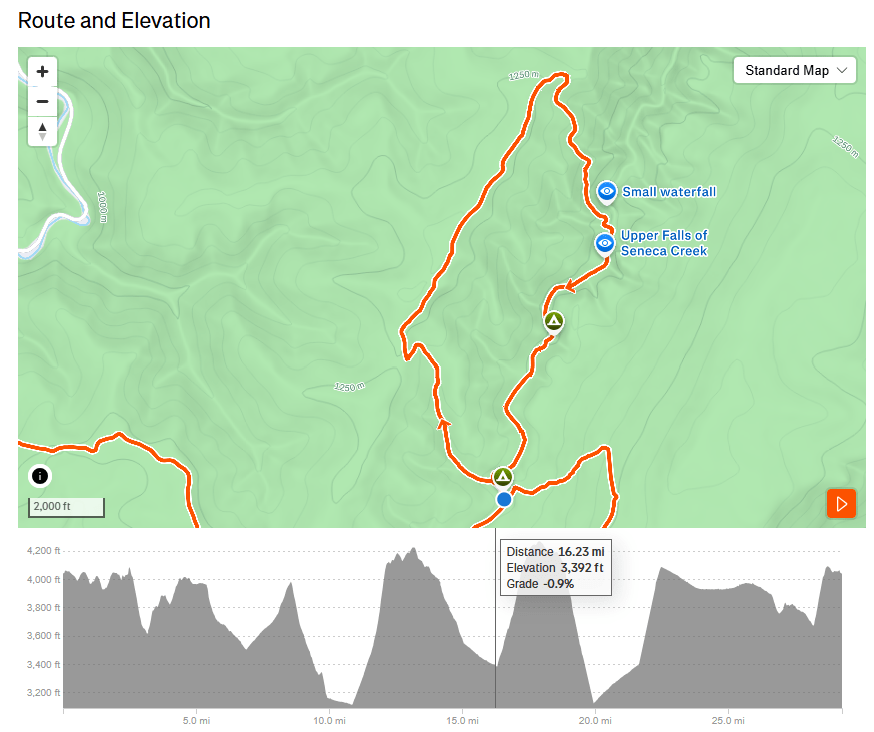
At the time, the only information I could find on Strava suggested the 3rd AS, Judy Springs, was closer to 18 miles than the 16.9 posted on the website. We all know there is a degree of error in what’s recorded by watches, but this had me worried because I would already be cutting it close on the pace if the miles were accurate. If the mileage was off by much and not in my favor, I would be looking over my shoulder for those balloon ladies all day. I’ve since found a map posted on 9/28/18 showing AS3 is at just over 16 miles. In the screenshot from Strava that is linked from the course website, the 5.7 mile loop from Judy Springs to Judy Springs is shown to start at just over 16 miles. That elevation still looks intimidating, it’s 5,491′ according to strava.
After much discussion at home, we decided this was feasible and I registered in June. Although the opportunity to stay in a yurt (!) at the start line was appealing, I was vetoed. The reasoning was something about how much I would dislike having to go outside to the shared bathrooms in the middle of the night. Probably accurate, but if you are less apt to mind that, there is tent camping at the start, along with dorm rooms. The race also recommends Nelson Rocks, about 30 minutes away, for rooms, primitive cabins, or tent camping. I looked around and found a cabin that was a little bit closer, although apparently only if you drive on FS roads. We compared airfare to area airports (DCA, IAD, PIT) and chose DCA, the cheapest and about a 4 hour drive. We flew in late Wednesday and spent the night near DC. Then we took our time driving to the packet pickup on Thursday, enjoying the scenery through the rain.
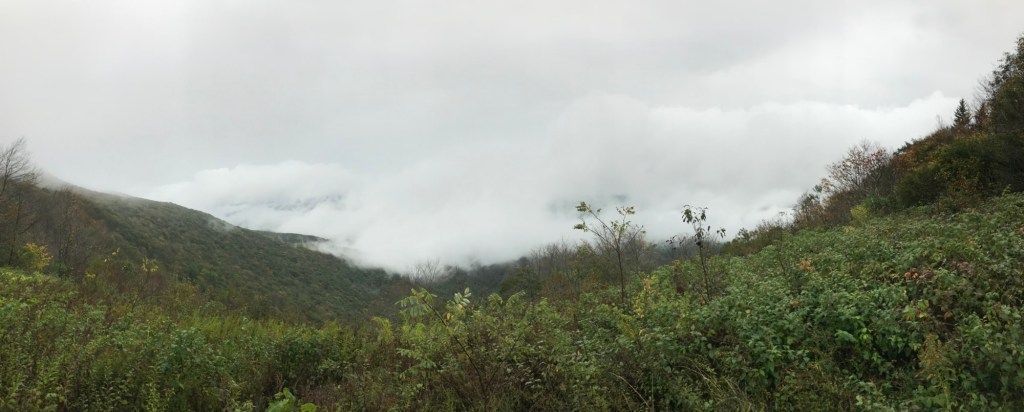
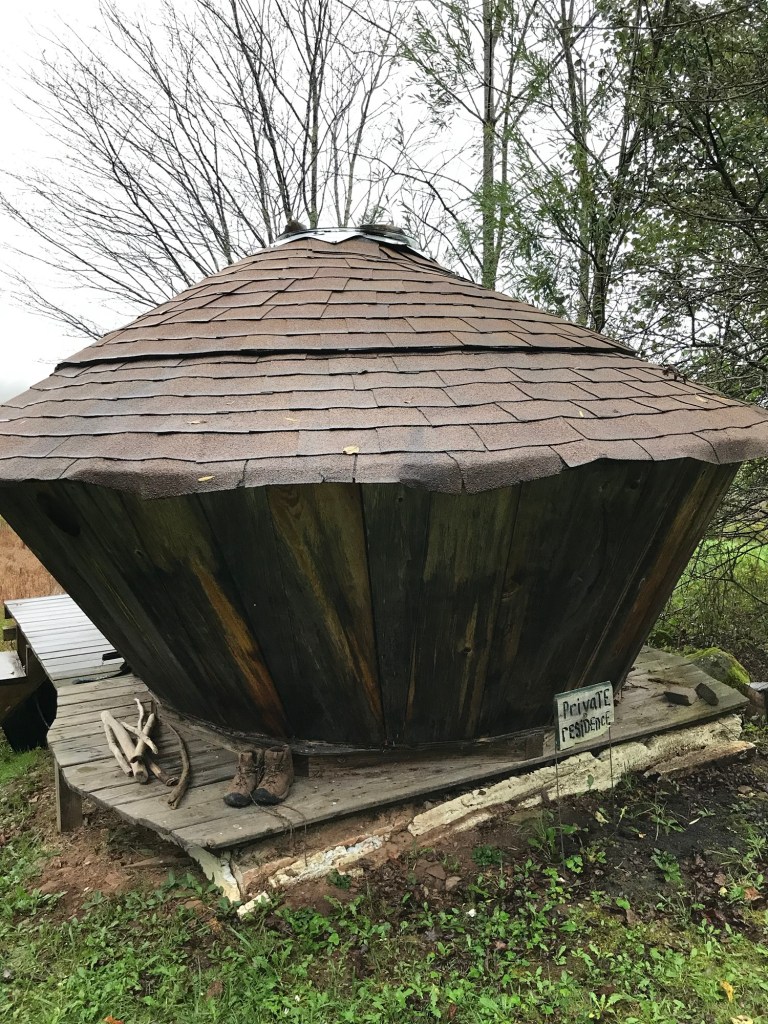
Packet pickup was busy when we got there with runners setting up camp in the drizzle, finding their dorm rooms, and getting ready for dinner that came with registration. I picked up my shirt and bib and with some anxiety, asked about the course. The very friendly volunteer said the area is beautiful, “although the trails are…not well traveled.” Then they noticed my husband’s shirt from the marathon in September and said – oh! you did Superior, you’ll be fine! I quickly added that I had only done the marathon, and slowly. I was reassured that as long as I stayed on course, I’d be ok. With that we headed to get dinner at the Gateway Restaurant down the road from our cabin where we would eat multiple tasty meals over the weekend. We then went to the cabin that I am required to note had neither internet nor TV at the time (now has both), so all we could do that night was listen to me worry about cutoffs.
My anxiety had a basis in reality; I was happy about coming back from an injury at Rocky and finishing the 50k in early August after a solid summer of training. I then got a little caught up in planning for the off trail events in Minnesota and my training after the 50k going into September was a little more uneven. We’d hired a new department director at work in August and the special project I’d been running for seven years without issue caught their attention. I was suddenly expected to make myself available nights and weekends. I missed only one long run before Moose Mountain, but finished ZERO in the four weeks between the Minnesota marathon and the WV Trilogy 50k. Not a good way to train for a demanding race!

Race Day
A storm came in overnight and a few trees were down around the cabin when we woke up on race morning. We took the back roads anyway. We saw trees down and lots of water, but nothing blocking the back roads. We made it to the start line with time to use the bathrooms (flush toilets!) and I realized while waiting to start that I was not prepared for the rain or cold. I borrowed my crew/husband’s oversized rain jacket and gloves before the start and hoped for the best. Just over 80 runners started that morning. The group had room to separate in the first two miles that looped a mile out from the start line on a dirt/mud road and back a mile through fields. The drizzle had stopped by the time I came back through the start area, DFL already. I handed the jacket back to my husband and continued on.
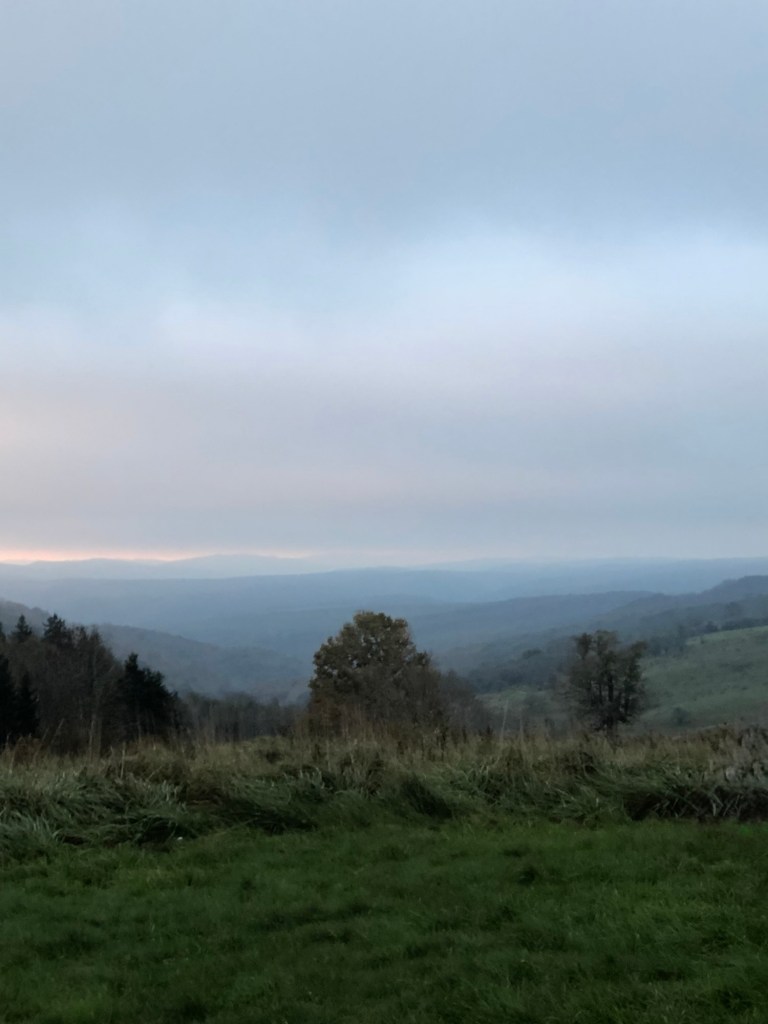
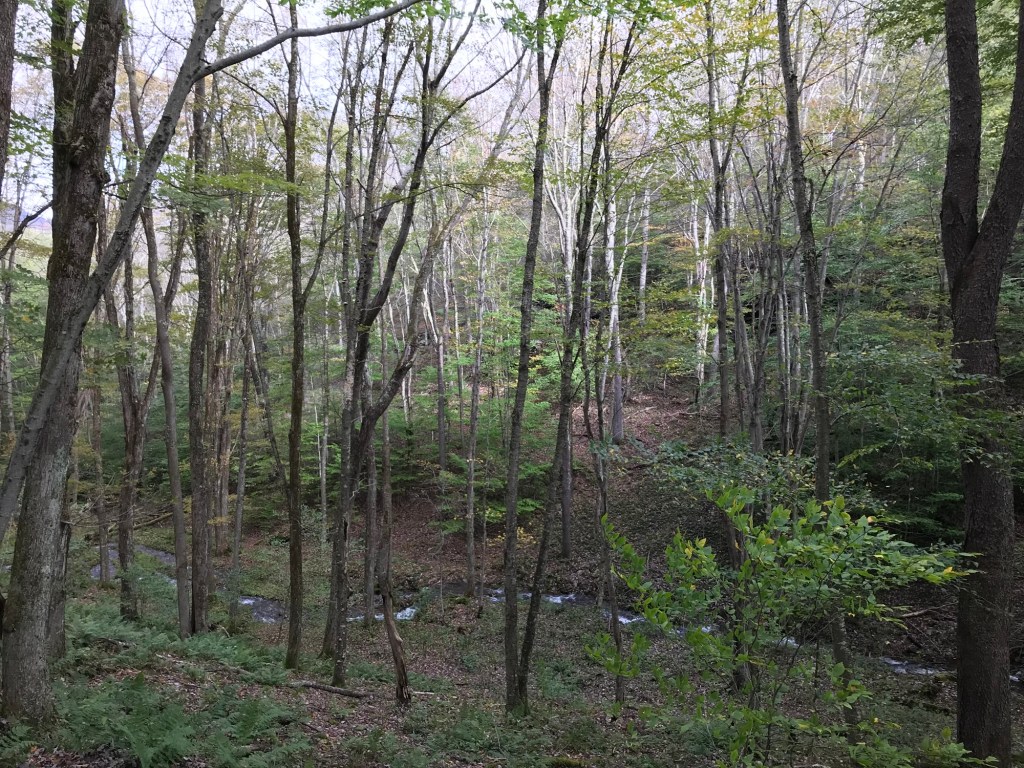
The trails were beautiful, and it was a cool, cloudy day. I was focused on keeping pace and staying on the trail. While the trails used for the race are established and permanently marked, the volunteer’s description of them being not well traveled was accurate. I had to stop at one point to check my Gaia map and confirm I was on the course. I was still (barely) keeping pace after AS1 at six miles in, when I slipped on a railroad tie step and apparently hit the lap button on my watch and somehow messed up the pace tracking. I was stressed but enjoying the scenery, the streams were full and leaves were falling.
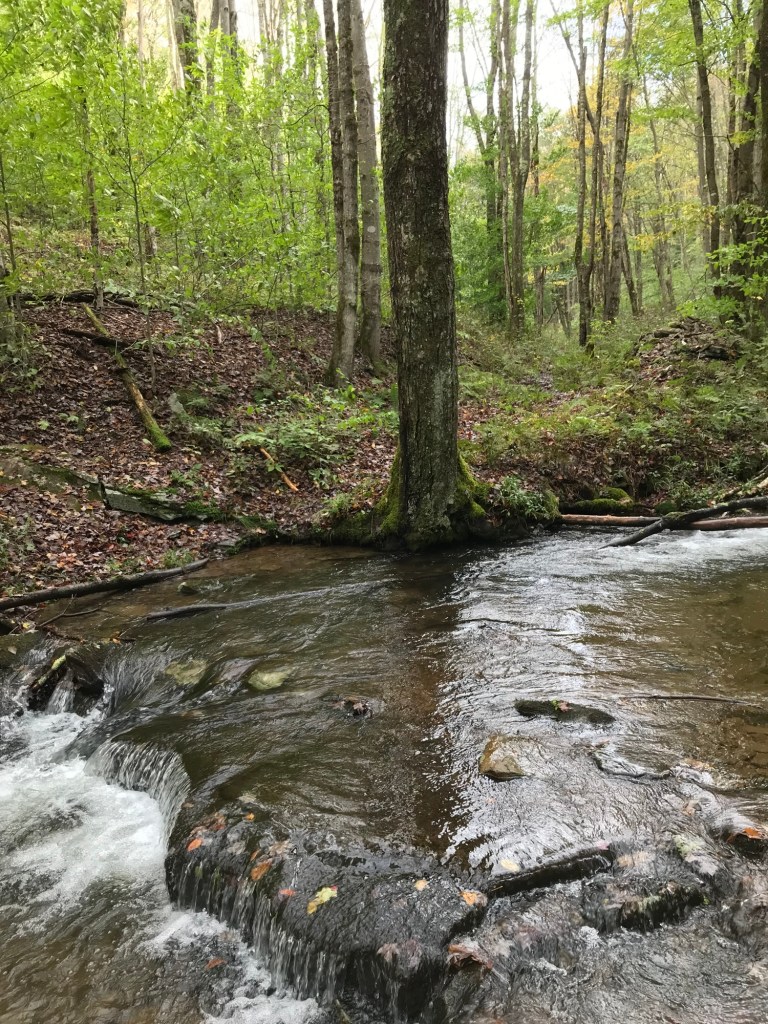
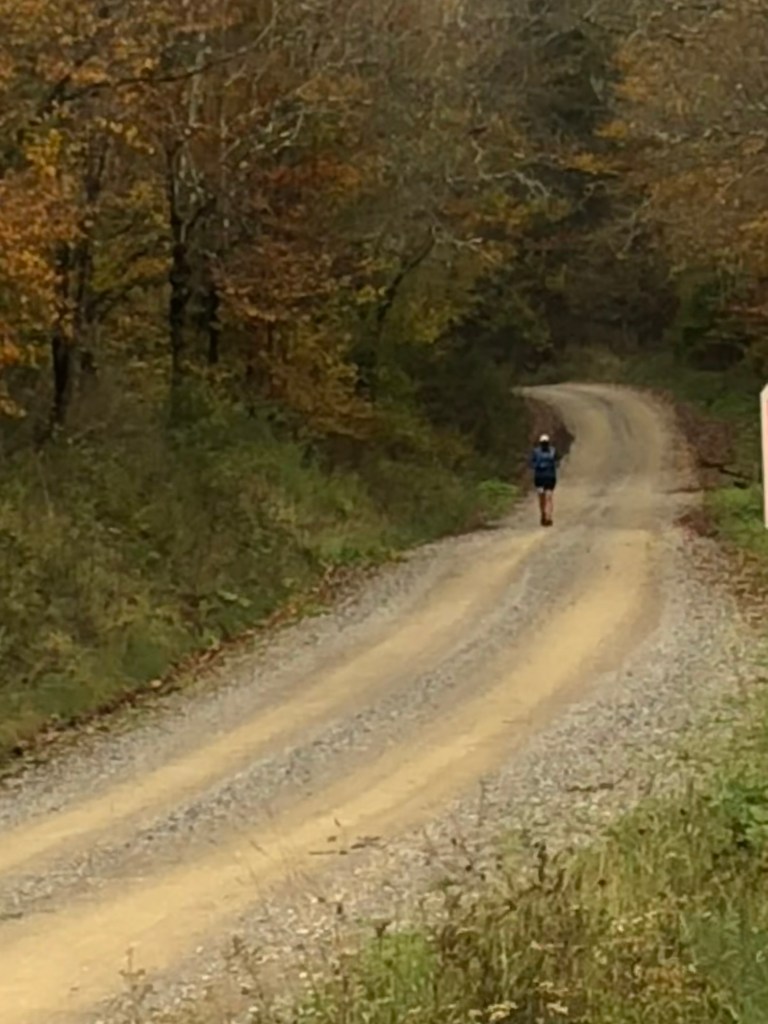
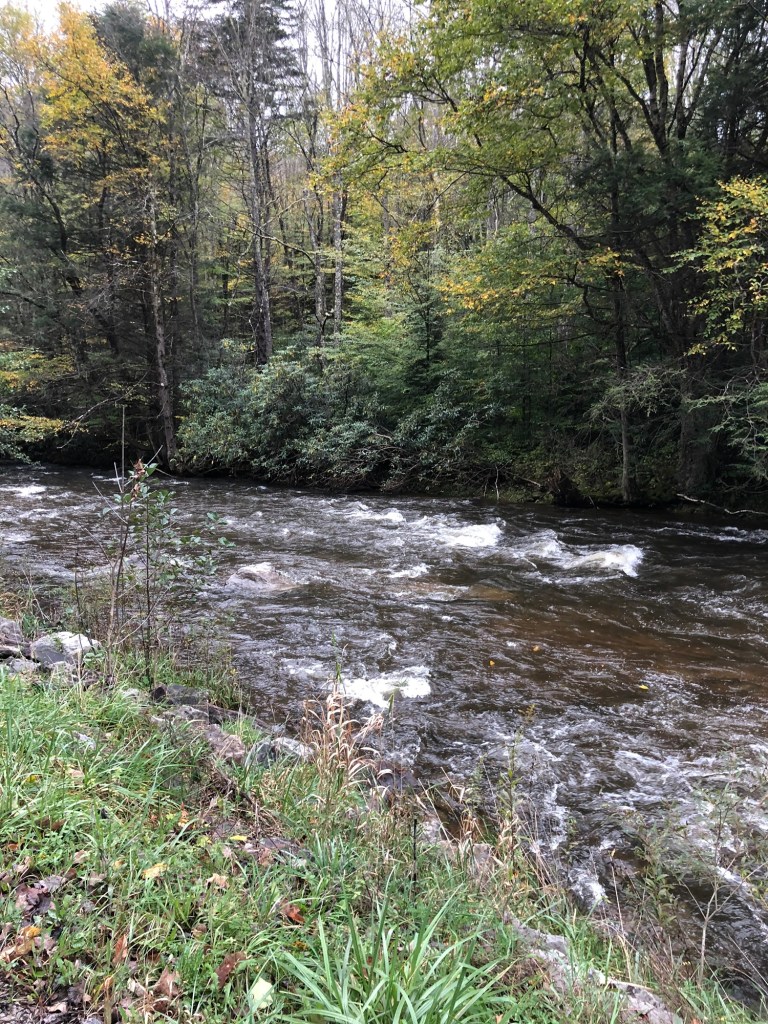
At 3 hours in, I was already tired by the climbing and knew the biggest climbs would be coming after the aid station #2 Bee Run. If I didn’t make the cutoff for aid station #3 Judy Springs at 12:30pm, I would have to skip the 5.7 mile loop and keep going until the Seneca aid station at 27.7 miles, or 22 miles if you miss the cutoff and can’t do the loop. Somewhere around 10 miles while pondering all of this, I needed a quick bathroom break and realized I was absolutely alone in the forest. I stopped and listened for a minute to be sure, then enjoyed being able to just step off the trail and go with absolutely no one around.
When I hit the dirt road leading to AS2 at Bee Run shortly after that, I was pretty sure I would not be able to make the following cutoffs. I was already uncertain about my pace and based on what I’d found on strava, I would probably have a longer distance to go to get to AS3 than expected and with a long climb too. The thought of making it to the next AS and being told to skip the loop but still have 5+ miles to go to meet my new husband who would be waiting around all day for me was not appealing. He’s assured me many times before and since that he doesn’t mind the wait. For some reason on this day when I was still trying to figure out Marriage Rules, it seemed selfish. So I told him I was quitting. He and the AS volunteers encouraged me to keep on, the volunteers said I was fine on time and pointed out I was still ahead of the sweepers. I appreciated their reassurance but all I could think when I heard that was – I WAS NOT ALONE OUT THERE???? Someone maybe saw me pee????
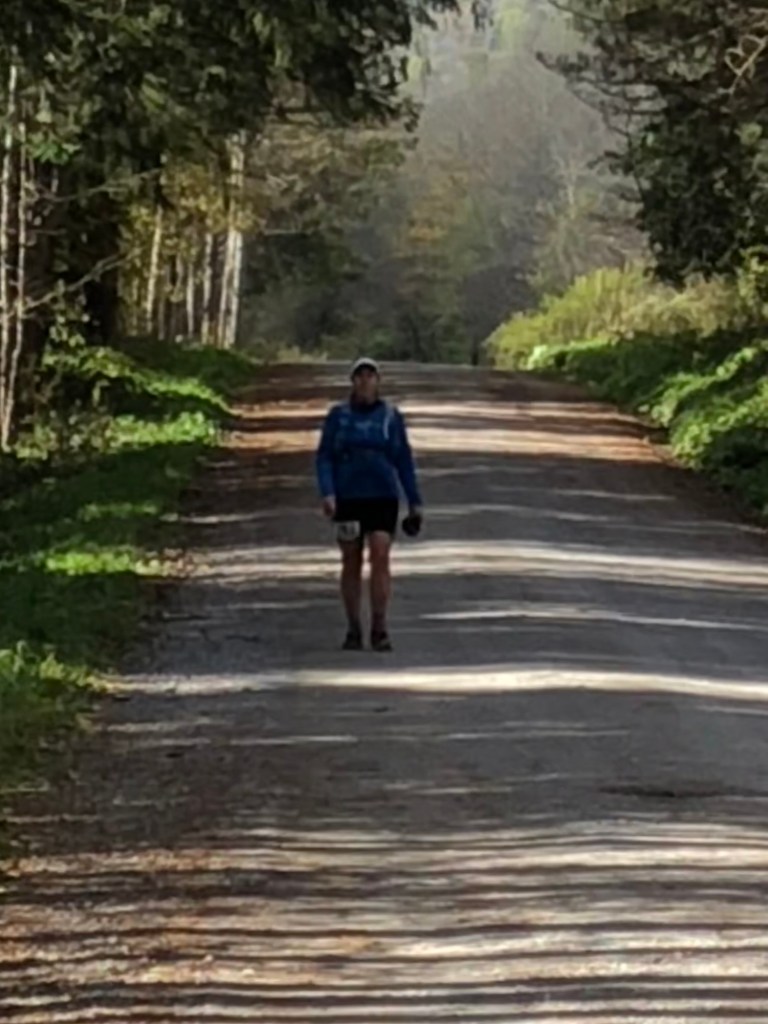
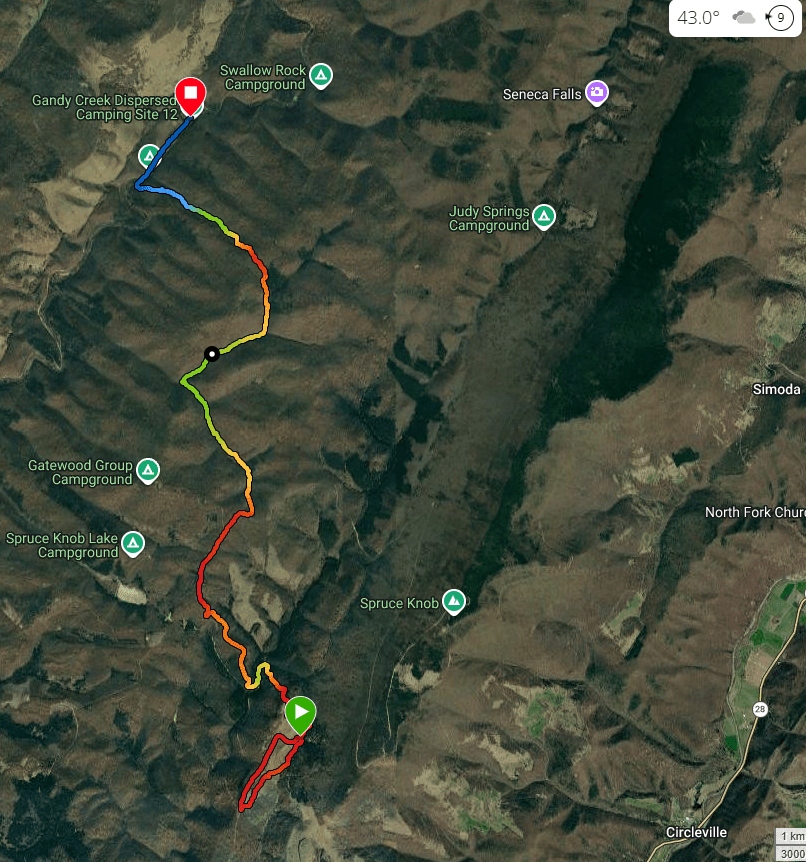
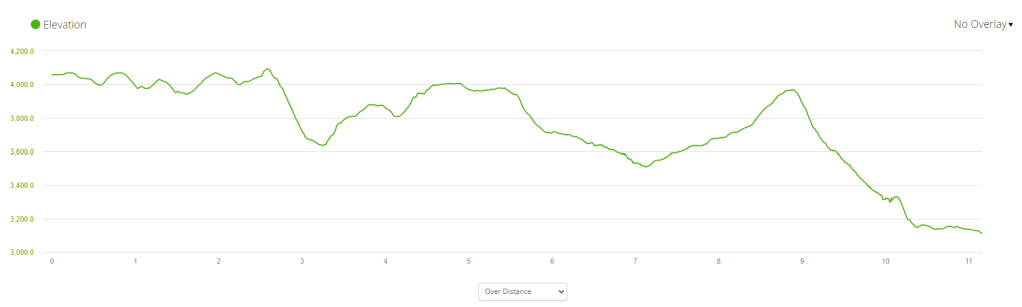
My average pace at 11.3 miles was 20:29, I do not regret stopping except that I have only a partial route and elevation to share. They match the website versions well to that point:
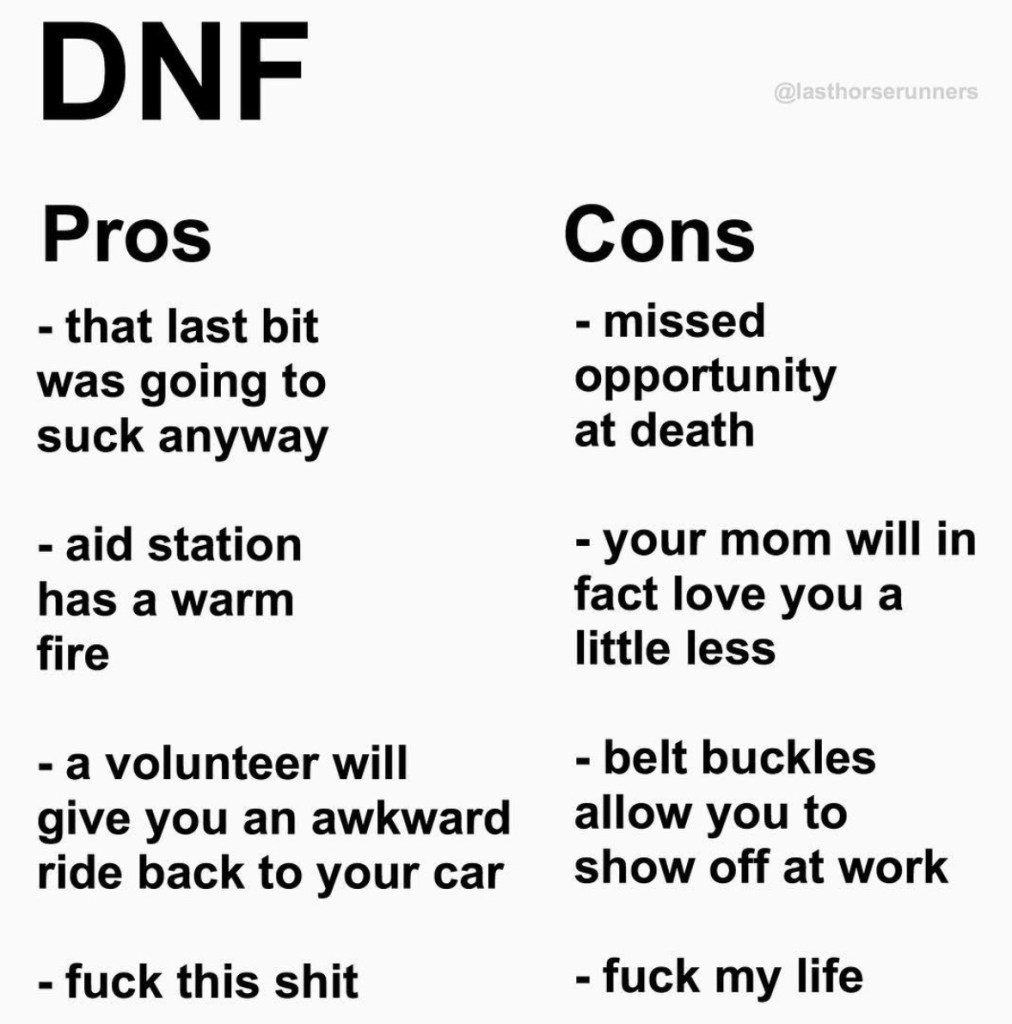
I was disappointed to not finish, but glad I tried.

The overall event is really well designed and supported, and the runners and hikers out there are inspiring. Aid stations were well stocked and volunteers were very helpful. Many courses proclaim their remote wildness. The little I saw of this one puts it in a small group that really do feel very remote and beautiful but are still accessible to a back of the pack runner. I’m not sure I will ever be able to hit the pace needed for this race, but I would love to be able to attempt it again!
Off trail
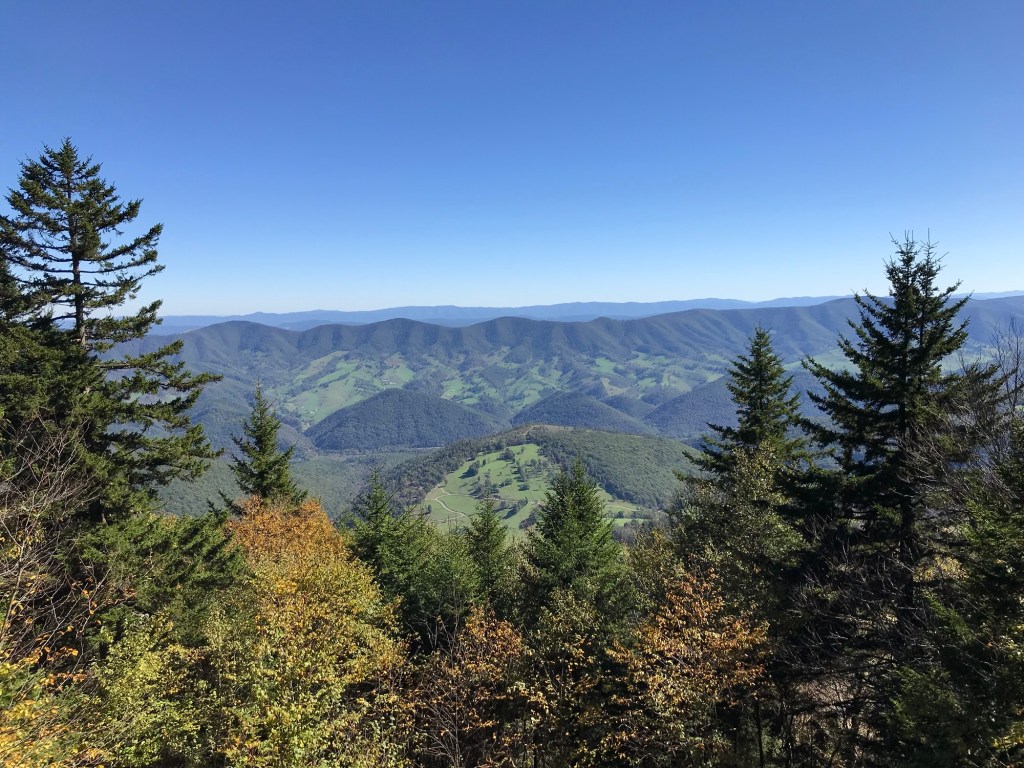
We headed back to the cabin, where I threw all of my wet running gear on the porch to dry. Then we explored the area, starting with Spruce Knob while my husband endlessly sang John Denver songs about country roads.
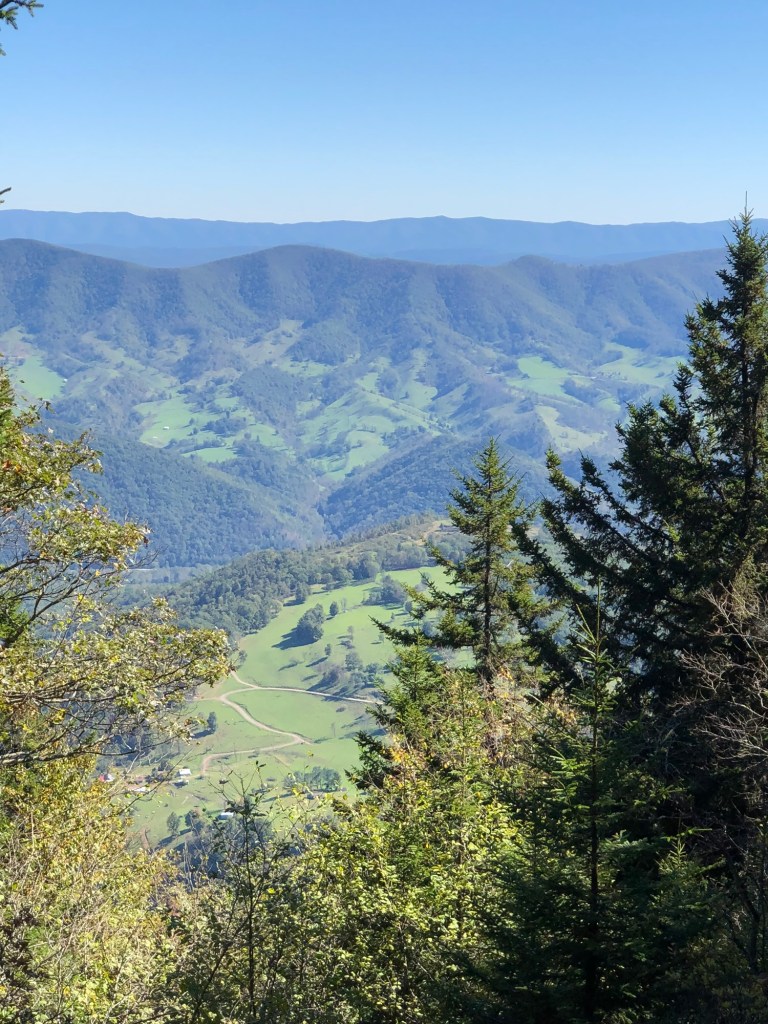
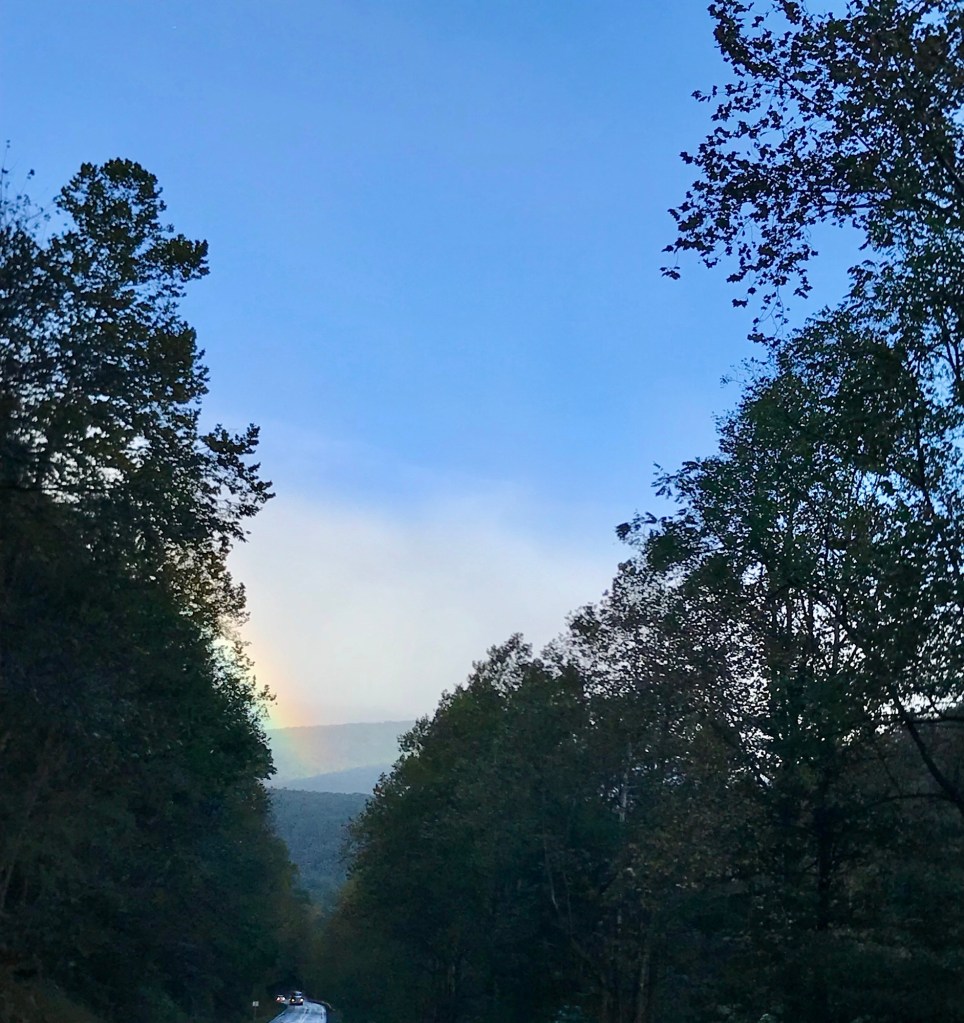
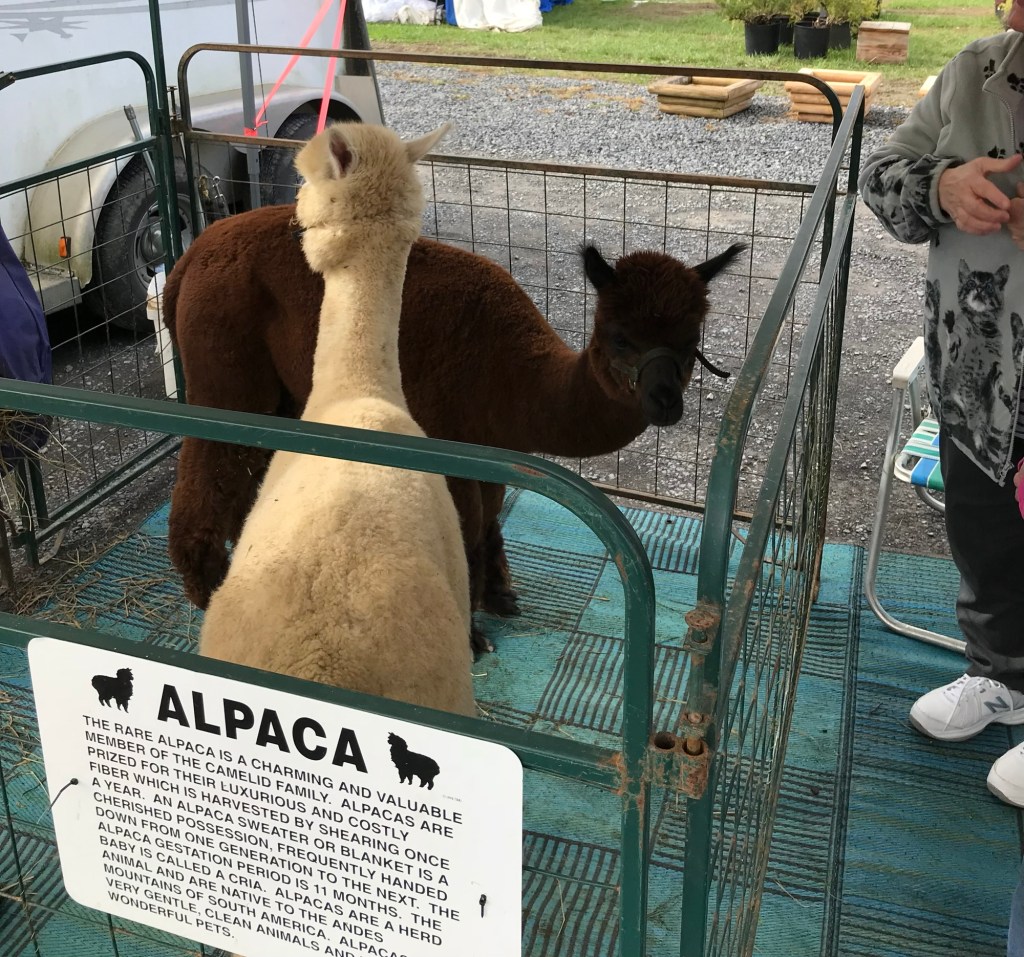
We headed back to DC on Saturday, taking our time on the drive again. We stopped at a town-wide swap meet/garage sale along the way and enjoyed the festivities.
As a weird coincidence, a good friend from West Virginia that I hadn’t heard from for a while texted me while we were exploring the area. He made me laugh not long after we met when someone else asked where in the state he was from. He responded by taking his left hand with palm facing himself, extending his middle finger and thumb, and pointing with his right had to a spot along the extended middle finger and saying, “right about here.” I thought of him when I found the patch in a store. I knew I’d be using it for this post with the subtle message from WV to me saying f@#§ y’all. I will eventually be back!
tl;dr
- Time limit: 10.5 hours for the 50k
- Total elevation: 4,871’ according to race website
- Course type: loop
- Trails: mostly singletrack, short sections of dirt roads near start and some aid stations, rumored to be runnable if you’re one of those fast types
- Aid stations: 4, with one repeated so effectively 5. Longest stretch without aid is 5.7 miles.
- Weather: It was cloudy, misty, and low 40s at the start, humid; sunny and warmer by the end of the day.
- Parking: plenty of parking in the field at the start/finish
- Runners: ranges from ~60 – over 80 for the 50k
- Nearest airport: DCA, IAD, and RIC are about 3.5 hours, PIT is about 4. Allow plenty of time for the drive to the start area, it’s rural regardles of the direction you’re driving from.
 Worst Pace Scenario